Apple Vision Pro
About
Apple Vision Pro inaugurates spatial computing as a product category, creating an interface paradigm where applications exist as dimensional objects floating within physical rooms rather than windows trapped behind glass screens. The device achieves this through an array of cameras, sensors, and displays working in concert to overlay digital imagery onto passthrough views of the surrounding environment with millimeter precision.
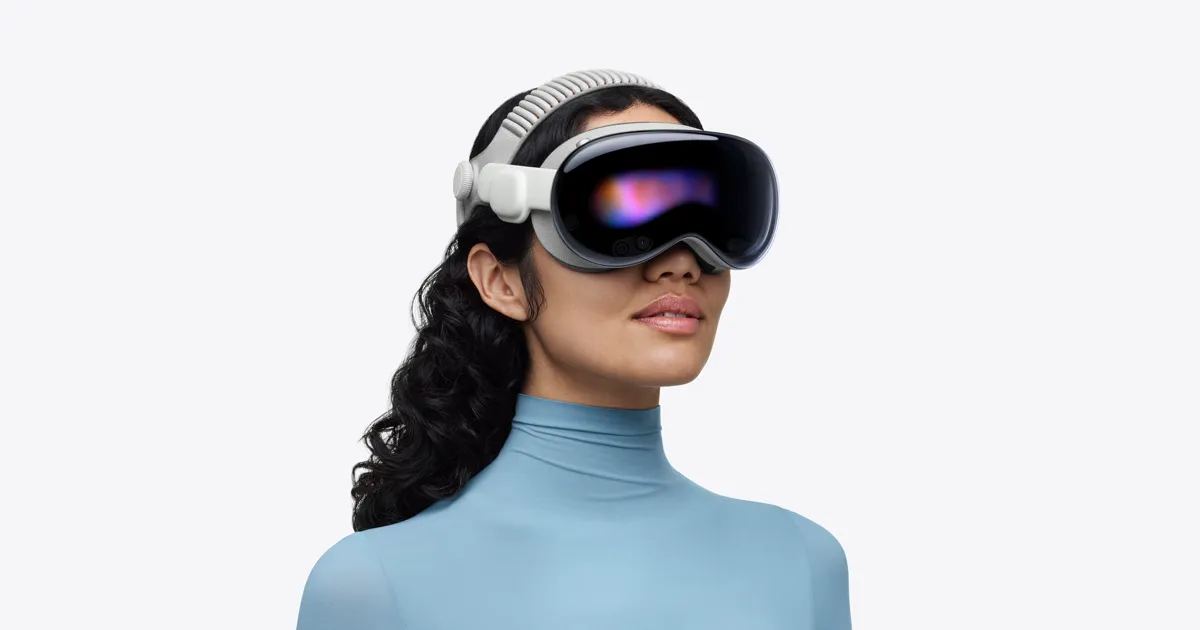
The exterior presents three-dimensionally laminated glass flowing into a machined aluminum frame that distributes the headset's weight across a modular headband system. Apple engineered the enclosure as a single curved surface uninterrupted by visible seams, treating the device as wearable sculpture rather than goggles strapped to faces. An outward-facing EyeSight display renders approximations of the wearer's eyes for observers, reducing the social barrier of conversing with someone in an opaque headset.
Inside, twin micro-OLED displays deliver 23 million pixels across both eyes, exceeding the combined resolution of typical 4K televisions for each eye independently. The M2 chip handles environmental processing while a dedicated R1 chip manages sensor fusion with 12-millisecond photon-to-photon latency, fast enough that head movements trigger display updates before the visual cortex detects delay. Eye tracking, hand tracking, and voice input combine into an interaction model requiring no controllers.
The visionOS operating system reimagines application interaction around spatial placement, window resizing through pinch gestures, and attention-based selection that highlights whatever the wearer looks toward. For professionals exploring volumetric design, immersive media creation, or collaborative visualization, Vision Pro provides a glimpse of computing interfaces no longer confined to rectangular screens mounted on desks.