Bauhaus
About
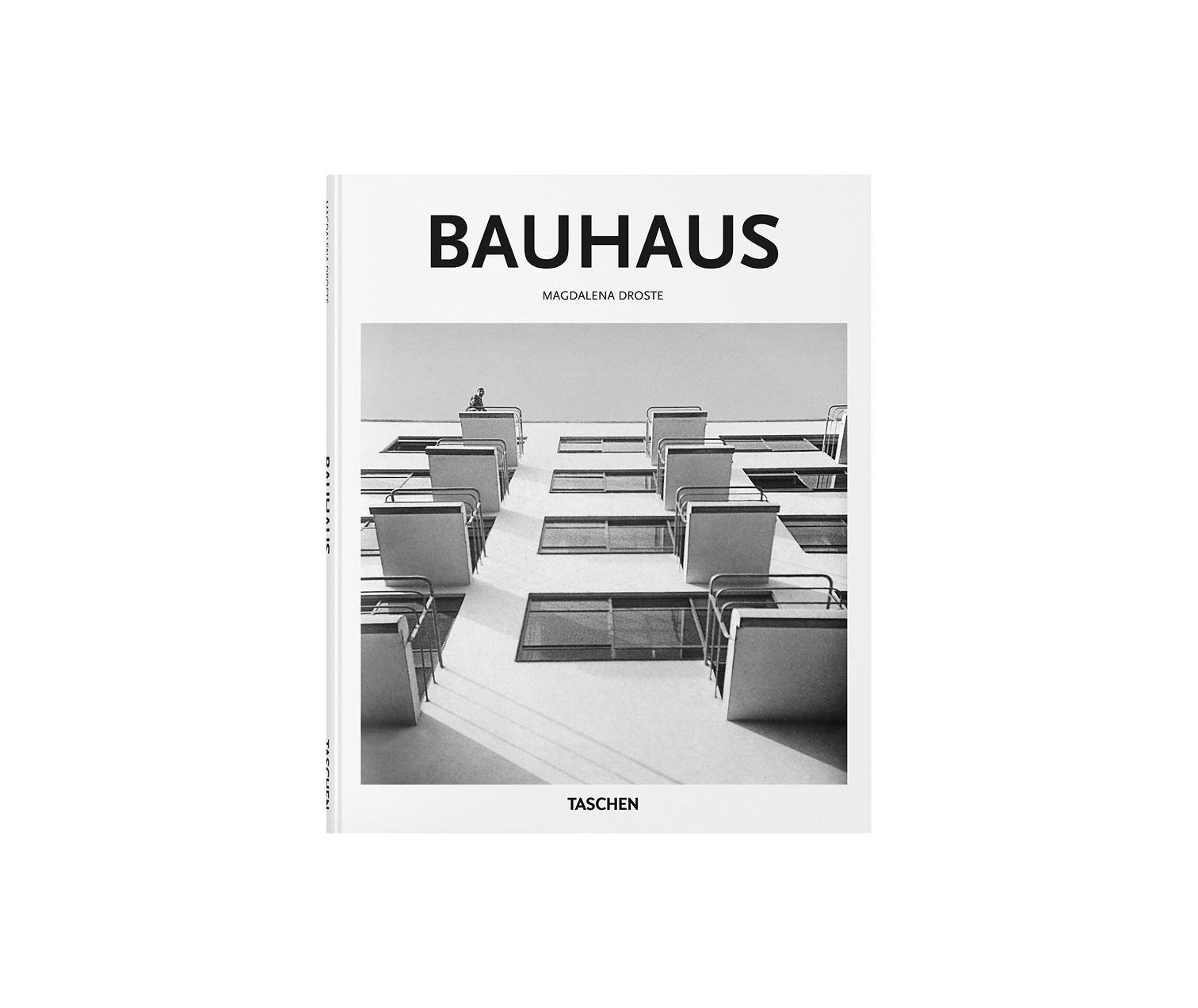
Taschen structured this Bauhaus volume as an efficient transmission of essential knowledge, providing comprehensive coverage within a format that respects readers' time and shelf space. The editorial approach prioritizes breadth across disciplines: architecture receives attention alongside furniture, graphic design, and the lesser-known textile and metalwork programs that produced equally influential practitioners.
Individual chapters examine figures central to the school's identity and evolution. Walter Gropius emerges through his founding vision and architectural commissions. Josef Albers appears in relation to the preliminary course pedagogy he developed and later exported to American institutions. Marianne Brandt represents the metal workshop's achievements and the institutional barriers women navigated despite the school's progressive rhetoric.
Visual documentation supports every analytical claim. Building photographs capture scale and spatial relationships that floor plans alone cannot convey. Product images present metalwork, ceramics, and furniture at sufficient resolution to reveal construction methods and material choices. Graphic works reproduce with the precision their geometric rigor demands.
The interpretive framework traces influence forward from the school's closure through successive generations of design practice. Contemporary objects and buildings that owe debts to Bauhaus vocabulary receive acknowledgment, demonstrating relevance rather than merely asserting it. For those beginning their design education or those revisiting foundational material after years of practice, this edition provides substantive introduction to an institution whose ideas remain inescapable in any serious design conversation.