Datejust
About
Rolex established certain horological conventions with the Datejust that competitors have spent decades attempting to match. Introduced in 1945, this model pioneered the automatic date display on a wristwatch dial, positioning the aperture at 3 o'clock where it has remained across subsequent generations.
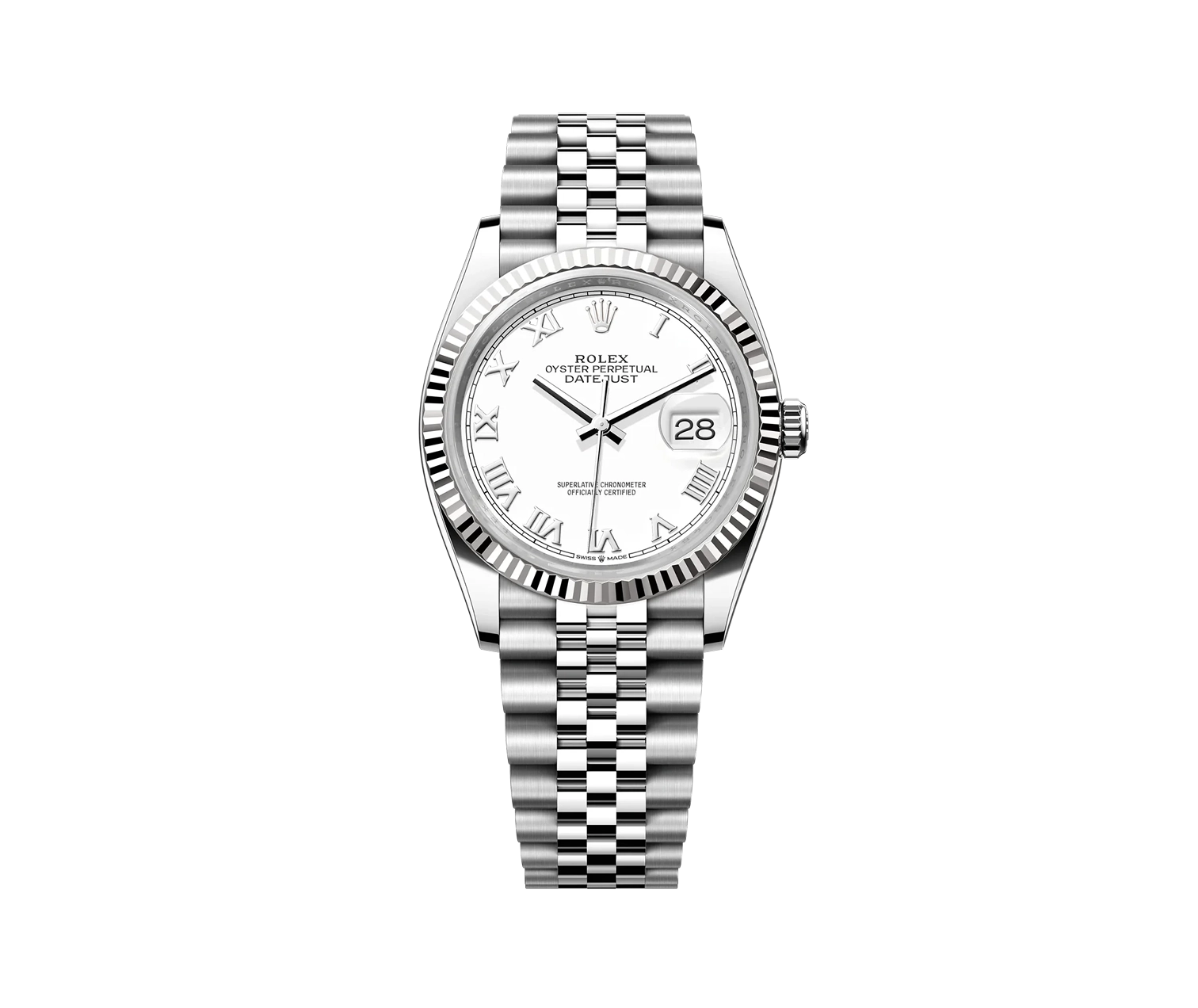
The fluted bezel contributes more than decoration. Originally functional for rotating timing bezels, the pattern here serves aesthetic purposes, catching ambient light and creating visual rhythm around the dial periphery. This texture contrasts with polished case surfaces, establishing the interplay of finish that defines Rolex visual language.
The Jubilee bracelet, first paired with the Datejust at launch, introduces additional complexity through its five-piece link construction. The central links feature softer curves than the outer links, creating a flowing appearance that drapes comfortably across wrist contours. This bracelet style has since become synonymous with dressy Rolex configurations.
The Cyclops lens magnifies the date display by a factor of 2.5, addressing legibility concerns that arise from compact date windows. This element protrudes slightly from the crystal surface, creating a distinctive profile recognizable across a room. The lens position directly above the date aperture requires precise crystal positioning during assembly.
Proportions maintain the balanced relationship between case diameter, dial space, and bracelet width that characterizes successful watch design. The Datejust occupies middle territory between tool watch durability and dress watch refinement, suitable for professional environments and weekend activities alike.