Mac Studio
About
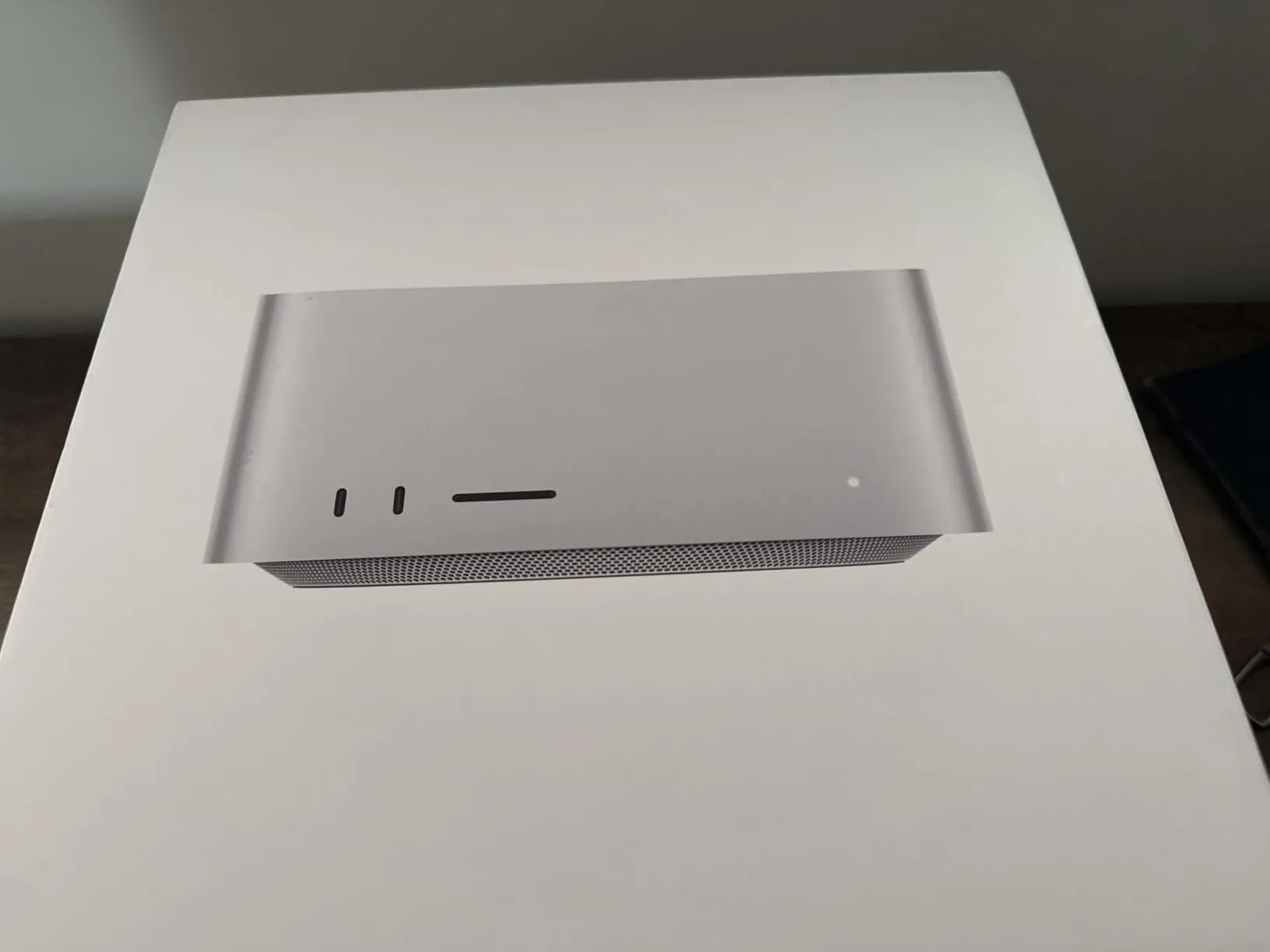
Apple positioned Mac Studio to fill the gap between Mac mini and Mac Pro, providing creative professionals with workstation-class performance in a form factor that belongs on desks rather than beneath them. The aluminum enclosure, roughly twice the height of a Mac mini while maintaining the same footprint, contains substantially more thermal capacity and computational hardware than its smaller sibling.
The chassis milling process creates the clean surfaces and tight tolerances that define Apple's industrial design language. Aluminum's thermal conductivity works advantageously here, spreading heat across the enclosure surface and dissipating it into ambient air. The cooling system, while more substantial than the Mac mini's, operates quietly enough that concentrated work proceeds without fan noise intrusion.
Configuration options span M2 Max and M2 Ultra chips, addressing different tiers of professional requirements. The Max configuration handles demanding video editing, 3D modeling, and software development workflows with headroom to spare. The Ultra variant, effectively two Max chips fused together, serves extreme requirements: 8K timeline editing, complex visual effects rendering, machine learning model training, and scientific computation that would otherwise demand dedicated server hardware.
Front-facing ports acknowledge that professional workflows involve frequent peripheral changes. SD card slots accept media directly from cameras. USB-C and USB-A ports accommodate the various drives, interfaces, and devices that creative work accumulates. The rear panel provides Thunderbolt connectivity for displays, storage arrays, and high-bandwidth peripherals that remain semi-permanently connected.
For professionals who previously faced the choice between portable constraints and tower bulk, Mac Studio represents liberation. It delivers rendering power, memory capacity, and I/O bandwidth that creative work demands while occupying desk space measured in square inches rather than cubic feet.