ScreenBar Halo 2
About
BenQ engineered the ScreenBar Halo 2 around a fundamental problem of modern desk work: the visual fatigue that accumulates when bright screens contrast sharply against darker surrounding environments. The solution integrates two distinct lighting modes within a single monitor-mounted fixture. The front-facing beam illuminates the desk surface and keyboard without casting reflections onto the display, providing task lighting that traditional desk lamps cannot achieve from their off-axis positions. The rear-facing ambient glow washes the wall behind the monitor with soft illumination that reduces the contrast ratio between screen and environment.
This dual approach addresses eye strain at its source rather than compensating after symptoms develop. When peripheral vision registers similar brightness levels across the visual field, the pupils maintain consistent aperture rather than constantly adjusting to accommodate competing intensities. Extended working sessions prove less fatiguing, and evening use generates less circadian disruption than harsh direct lighting.
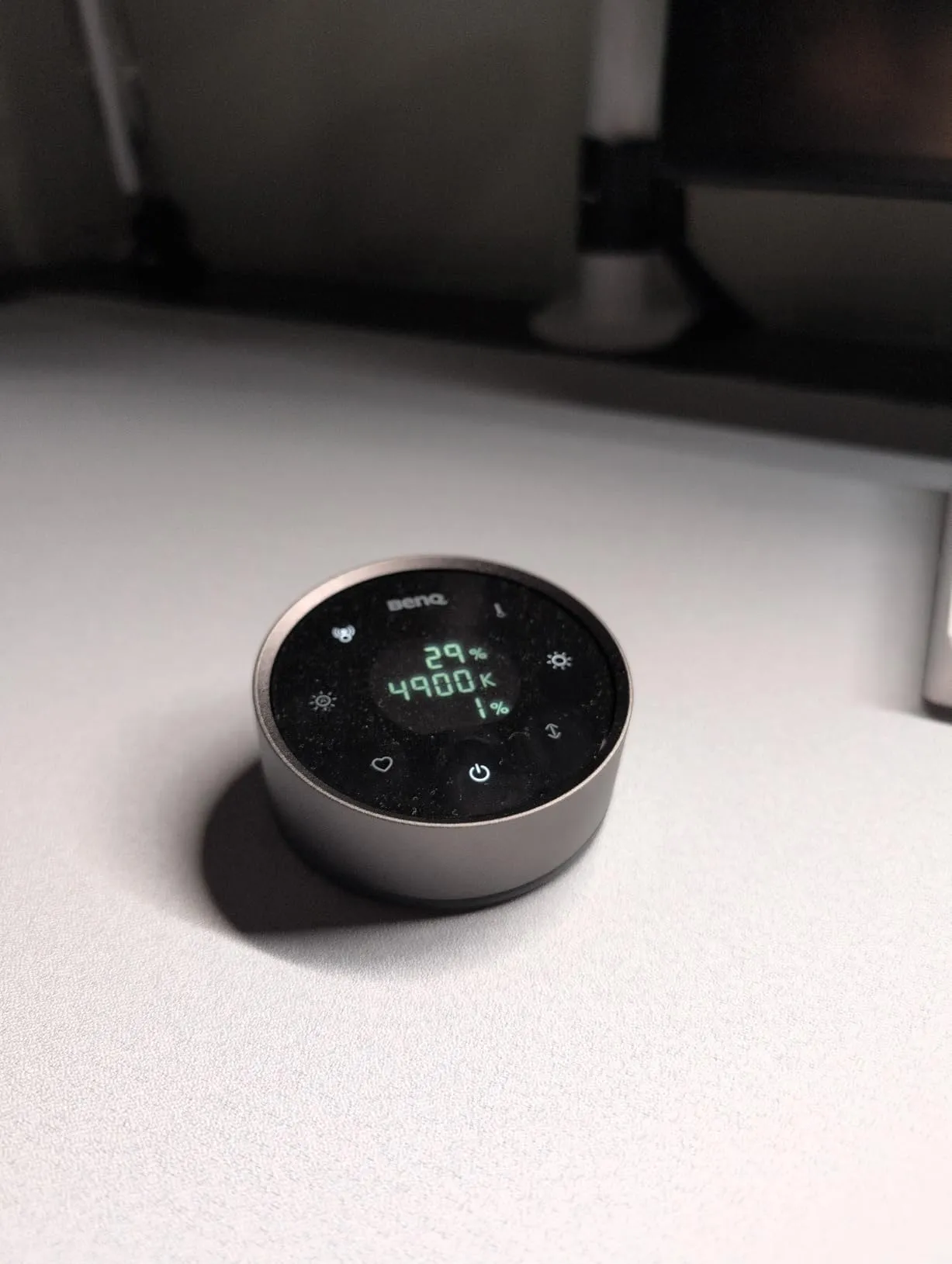
The mounting system attaches directly to monitor frames without requiring desk surface commitment or cable routing across work areas. Adjustment controls govern both intensity and color temperature, allowing customization to match ambient conditions, task requirements, and personal preferences. The color temperature range spans cool tones suited to detail work through warm spectra appropriate for evening hours when blue light reduction matters.
Construction quality reflects BenQ's display heritage, with materials and finishes that complement premium monitors rather than undermining desk aesthetics. The fixture maintains a low profile that avoids visual intrusion into the upper portion of the workspace. For those who spend substantial hours before screens and seek to reduce the physical toll of that positioning, the ScreenBar Halo 2 represents a lighting intervention designed specifically for contemporary computing environments and the particular challenges they present to human visual systems.