Submariner
About
Rolex introduced the Submariner in 1953, establishing the template that dive watches have followed ever since. Subsequent decades brought incremental refinements rather than radical redesigns, each generation improving upon proven architecture while maintaining the essential visual language that made the original significant. The current reference continues this evolution, representing accumulated expertise in producing timepieces that function reliably under conditions most watches cannot survive.
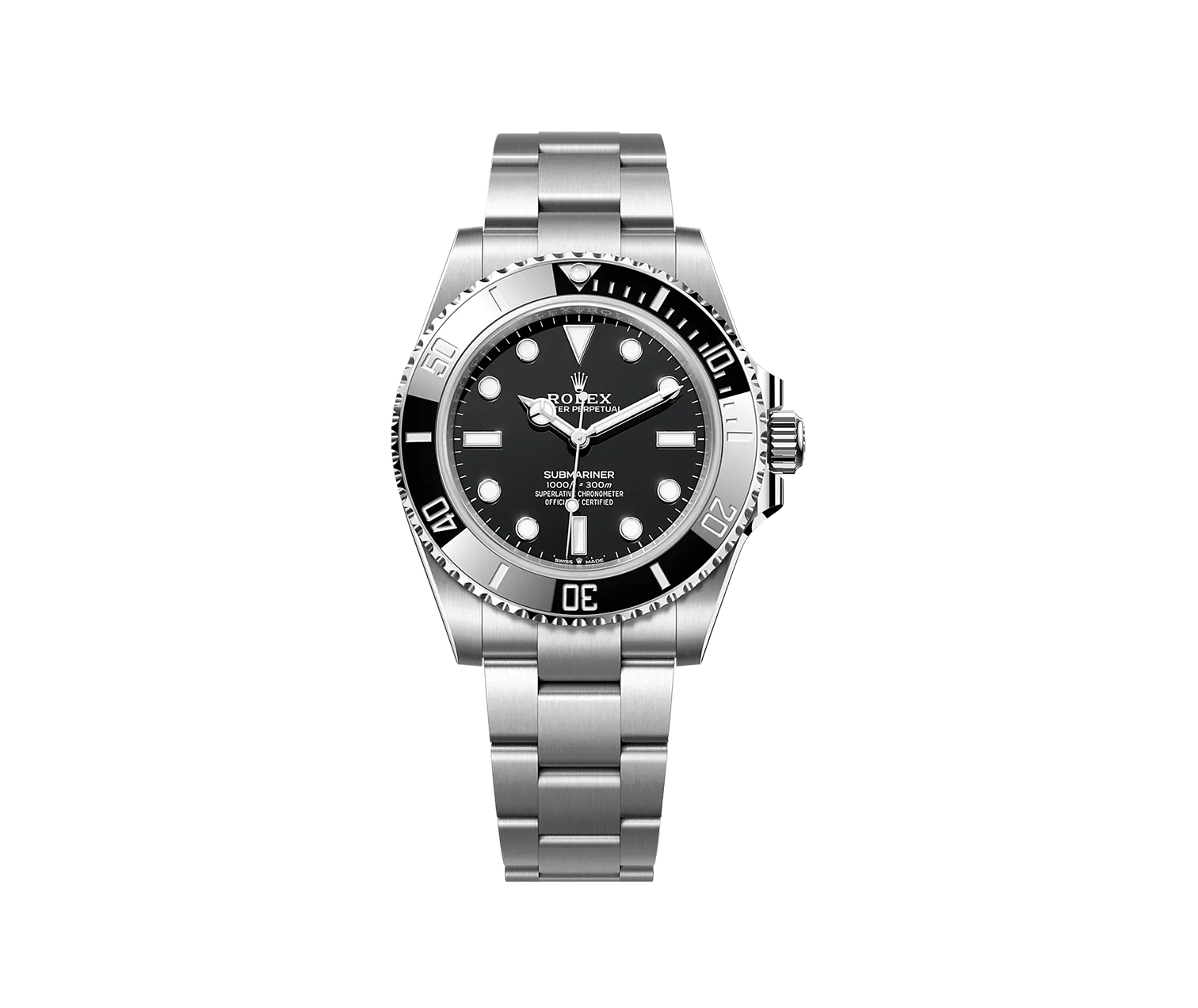
The unidirectional rotating bezel permits elapsed-time tracking essential for underwater activities, with markings rendered in high-contrast coloring that remains legible through diving masks and turbid water. Hour markers receive chromalight luminescent material that absorbs ambient light and releases it gradually through hours of darkness, maintaining visibility when natural illumination fails. The dial layout prioritizes instant time reading over decorative complexity, positioning hands and indices for rapid comprehension during circumstances where attention cannot linger.
The Oyster case represents one of watchmaking's most recognized achievements: a housing that seals completely against water intrusion while permitting necessary functions like winding and time-setting. The Triplock crown system adds redundant sealing barriers, enabling depth ratings that exceed recreational diving requirements by substantial margins. Case construction from Oystersteel ensures corrosion resistance in saltwater environments while providing the scratch resistance that active wear demands.
Beyond dive functionality, the Submariner has evolved into a cultural object worn far more often in boardrooms than beneath waves. Its proportions balance presence against wearability, substantial enough to convey seriousness without overwhelming average wrist sizes. Rolex has created an instrument that transcended its original purpose, becoming instead a standard against which competing designs continue to measure themselves.