Olto
About
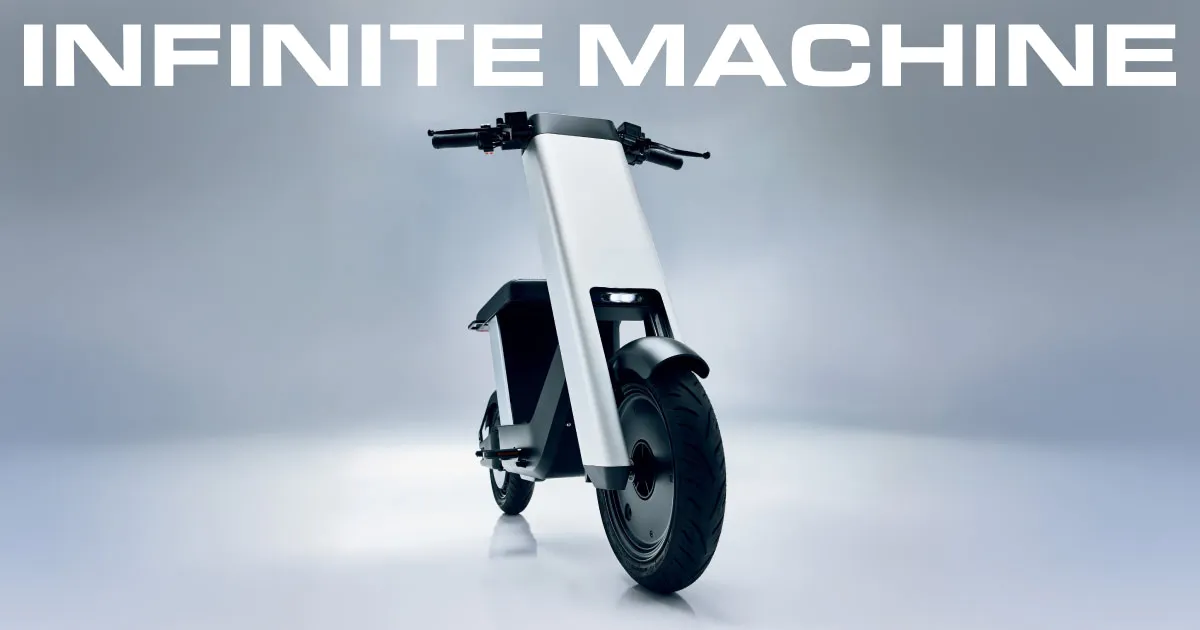
Infinite Machine approaches urban mobility with the precision typically reserved for architecture or industrial equipment. The Olto emerges from this philosophy as an electric scooter that treats structural geometry as visual identity. Its frame follows clean angular lines, each tube and joint positioned with deliberate intent. The overall silhouette reads as diagram made physical, a vehicle that reveals rather than conceals its engineering logic.
Practical considerations for city riders receive equal attention. The battery pack removes from the frame for indoor charging, eliminating the need to bring the entire scooter inside or locate outdoor charging stations. This separation acknowledges urban realities: apartment dwellers cannot always store vehicles near outlets, and office workers need flexibility in how and where they replenish range.
Material selection balances competing demands. The frame must be light enough for carrying up stairs or onto transit, yet rigid enough to absorb the shocks of uneven pavement without flexing uncomfortably. The Olto achieves this through careful alloy choices and joint construction, providing stability at speed and agility during low-speed maneuvering through pedestrian areas.
Integrated lighting serves both safety and aesthetic purposes, illuminating the path forward while reinforcing the scooter's presence as a designed object rather than utilitarian appliance. Detail work throughout, from fastener placement to surface finishing, maintains the elevated craft standard that Infinite Machine establishes as brand identity.
For those who view transportation as an extension of personal environment rather than mere utility, the Olto offers something beyond basic conveyance. It demonstrates that even the most functional categories of objects can reward aesthetic consideration and material intelligence.